Should Wedding Invitation Envelopes Be Lined?
- Gisella Tan
- Jan 4
- 5 min read

Your wedding invitations are your guests' first sneak peek into your wedding; naturally, you want them to arrive at their doorsteps in perfect condition, with no smudged ink, crumpled corners, or unexpected tears.
When considering the style of your wedding invitations, one question you may come across is: should wedding invitation envelopes be lined? The debate around lined vs. unlined envelopes isn't just about protection and practicality, but also about aesthetics and the anticipation they build.
Here's everything you need to know about lined wedding envelopes vs. unlined ones: when they're worth it, when they're not, and alternatives that offer similar polish.
Short answer: Wedding invitation envelopes do not need to be lined, but lined envelopes are often used for formal weddings, heavier paper invitations, or when couples want a more elevated presentation. Unlined envelopes are perfectly acceptable for casual, modern, or eco-conscious celebrations.
What Are Lined Envelopes?

Lined envelopes feature an additional layer of material on the inside (typically paper, fabric, or foil) that serves as a decorative inner coating. This lining adds a pop of elegance and color while also reinforcing the envelope, providing a more robust structure for its precious cargo: your invitation.
When Lined Envelopes Are Worth It (And When They Aren't)
Not sure which way to go? Here's a quick decision framework.
Lined envelopes make sense if...
Your invitations are letterpress, foil-stamped, or printed with dark ink that might transfer
Your wedding is black-tie, formal, or traditional
Presentation matters more than budget
You're mailing invitations internationally (extra protection helps)
The lining coordinates with your wedding colors or theme
Unlined envelopes are usually fine if...
Your design is minimalist or modern
Sustainability is a priority for you
Your invitations are lightweight and printed with fast-drying ink
Your wedding is casual, intimate, or contemporary
You'd rather put the budget toward something else
Pros of Lined Wedding Invitation Envelopes
Here are some reasons why many couples opt for lined envelopes for wedding invitations:
Aesthetic appeal and tradition: The lining can match your wedding's color scheme or include a pattern that hints at the style of the event. Lined envelopes are also a nod to tradition; they've long been associated with formal events and special occasions.
Extra protection: Lined envelopes offer additional protection against the elements, ensuring your invitation lands in guests' mailboxes in perfect condition. This is especially valuable for letterpress or foil-stamped invitations where ink transfer is a concern.
The "wow" moment: There's something undeniably special about opening an envelope and seeing that flash of color or pattern. It builds anticipation before guests even see the invitation itself.
Do lined envelopes affect postage?
This is a question that doesn't get asked enough. Yes, lined envelopes add weight, sometimes enough to bump you into the next postage tier, especially if your invitation suite already includes multiple inserts.
A few practical tips: weigh a fully assembled invitation (with liner, RSVP card, and any other inserts) before buying postage in bulk. Consider hand-canceling at the post office to prevent machine damage to thicker envelopes. And always send a test invitation to yourself first; you'll catch any postage surprises before they multiply by 150.
Cons of Lined Wedding Invitation Envelopes
While lined envelopes are popular, keep these considerations in mind:
Added expense. Lining envelopes can add $0.50 to $2.00 per envelope to your stationery budget, which adds up quickly depending on your guest count. For 150 invitations, that's an extra $75 to $300.
Less environmentally friendly. Unlined envelopes are simpler to produce and easier to recycle, making them a better choice for eco-conscious couples. Some liners (especially foil or fabric) can't be recycled at all.
May not match modern aesthetics. The clean, simple lines of unlined envelopes are often more fitting for contemporary or minimalist wedding styles. A liner can feel fussy if the rest of your stationery is pared-back.
4 Alternatives to Lined Envelopes
If you like the idea of elevating your invitations but don't want full envelope liners, these alternatives offer similar visual impact with fewer tradeoffs.
Tissue paper inserts
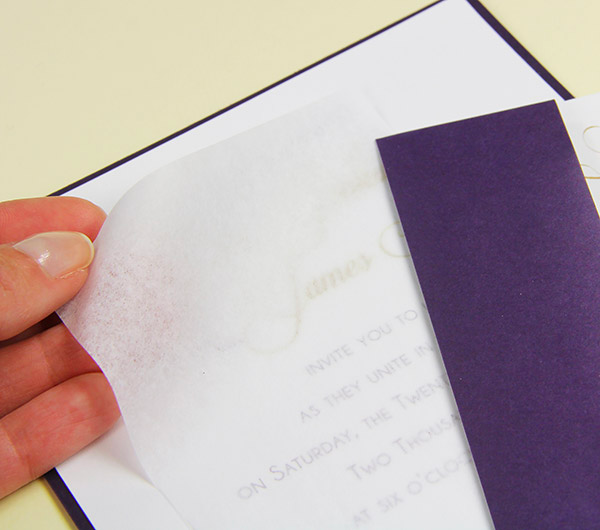
Tissue paper inserts are a traditional alternative to lined envelopes. They provide a protective layer over the invitation and add a touch of elegance as guests unveil it. While they're not as robust as envelope liners, they serve a similar purpose and have an old-school charm that some couples love.
Pros
Cost-effective: Tissue inserts are significantly less expensive than full lining.
Protective: They can still protect the invitation from ink smudging.
Customizable: Tissue papers come in various colors and can be cut to size.
Cons
Less durable: They're not as sturdy as traditional liners.
Extra assembly required: Inserting tissue paper into each envelope can be time-consuming.
Decorative stamps or stickers

Using decorative stamps or stickers can infuse personality into your wedding invitations without the need for liners. This approach allows for custom designs that complement your wedding theme, offering a modern twist to your envelopes.
Pros
Personal touch: Stamps and stickers can be customized with your initials, wedding date, or theme.
Efficient: They're quick to apply and require less work than lining.
Versatile: They can be used on the envelope exterior for a decorative touch.
Cons
Limited protection: They do not offer the same level of protection as liners.
Potential to appear informal: Some may find stickers less formal than traditional liners.
Embossing or calligraphy

Embossing or calligraphy on the envelope itself is a luxurious alternative to lining. This option adds tactile and visual appeal, with the ability to personalize each envelope with exquisite textural details that stand out to the recipient.
Pros
Elegant presentation: Both techniques add an upscale feel to the envelopes.
Customization: You can choose from various fonts and designs for a unique look.
Cons
Higher cost: These options can be more expensive than liners, depending on complexity.
Time-intensive: Both embossing and calligraphy are labor-intensive and can extend preparation time.
Printed envelopes

Printed envelopes offer a way to incorporate intricate designs, patterns, or motifs that resonate with your wedding's theme. This can range from subtle floral prints to bold graphic designs, allowing for a fully customized envelope without the traditional liner.
Pros
All-in-one solution: Printing directly on the envelope can include decorative elements and address details.
Wide range of designs: The possibilities are endless with digital or letterpress printing.
Cons
Can be pricey: Depending on the print method and design, this can be a costly alternative.
Requires special handling: Printed envelopes may need to be handled carefully to avoid smudging and wear.
So, Should Wedding Invitation Envelopes Be Lined?
Ultimately, your wedding invitations are a reflection of your personal style and the type of wedding you're planning. Whether you opt for the classic charm of lined envelopes or the sleek appeal of unlined ones, it's all about what feels right for you.
For formal, traditional weddings (or anytime you want that extra "wow" moment when guests open the envelope), liners are a lovely touch. For modern, minimalist, or eco-conscious celebrations, unlined envelopes are perfectly appropriate and often preferred.
Because envelope choices are mostly about presentation, many couples move the practical details (directions, accommodations, weekend schedules) to their wedding website or use text-based tools like Daisy Chat to handle guest questions separately. That way, your invitation can focus on being beautiful, not comprehensive.
Whatever you choose, remember: there's no wrong answer here. It's your day, and your envelopes should feel like you.


Comments